As drivers get older, road rules do not change — but the expectation to understand and follow them correctly becomes more important, especially for drivers who are required to complete a medical or fitness-to-drive assessment.
School zones are one of the most common areas where misunderstandings occur. They are also high-risk environments, which is why assessors pay close attention to how drivers respond to them.
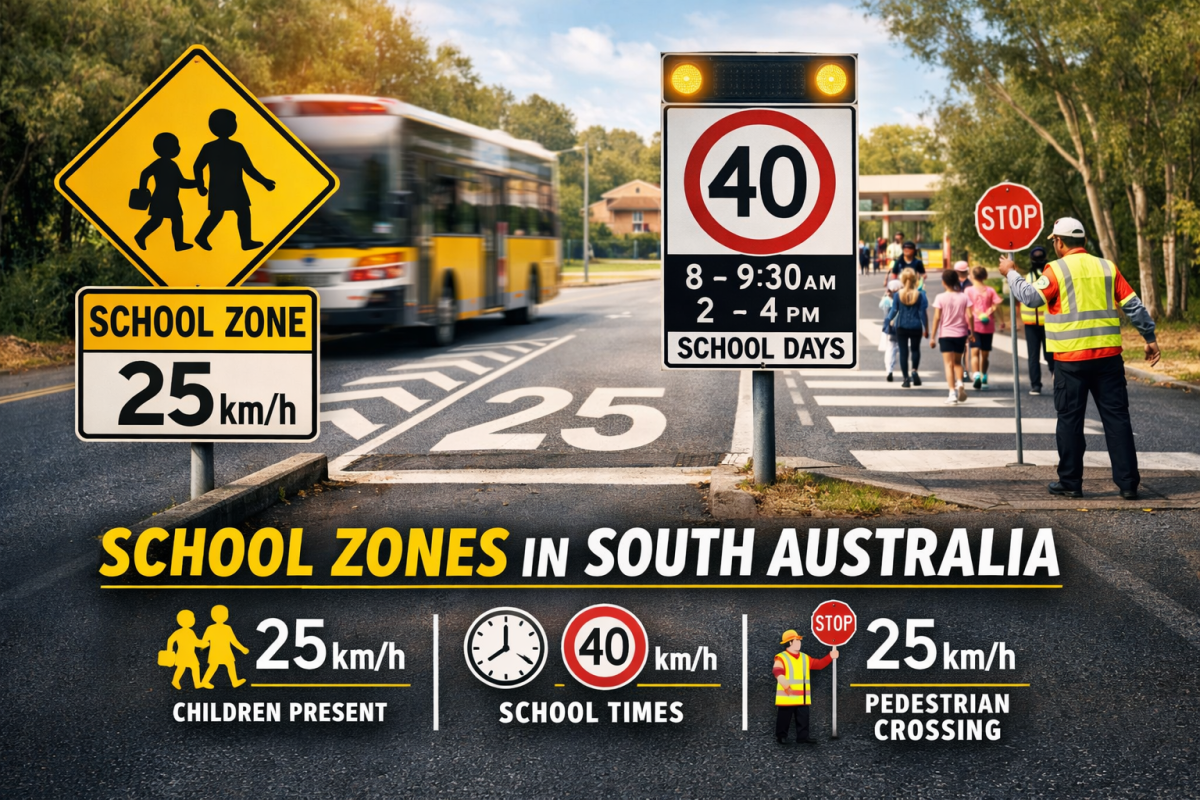
In South Australia, there are three different types of school zones. Each one is activated in a different way.
The Three Types of School Zones in South Australia
1. “Children Present” School Zones (25 km/h)
This is the traditional school zone found on local streets near schools.
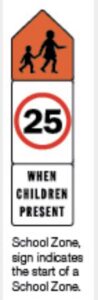
How to recognise it
- Yellow school warning sign with children symbol
- Zigzag road markings on the approach and within the zone
- Speed sign stating 25 km/h WHEN CHILDREN PRESENT
When it applies
- Any time of day
- Any day of the week
- Including weekends and school holidays
• As soon as children are present
Children may be:
- Walking on the footpath
- Waiting to cross
- Riding bikes or scooters
- Standing near the road
Important point for drivers
The zigzag road markings are a warning only.
They help you notice the school zone early, but they do not control the speed limit.
The rule is simple:
If children are present, you must drive at 25 km/h from the first school sign until the end school sign.
2. Flashing-Light School Zones (25 km/h)
Some school zones and school crossings use amber flashing lights.
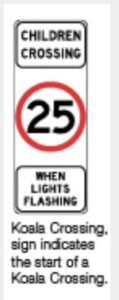
How to recognise it
- Amber lights attached to or near the school speed sign
- Often near a supervised school crossing
When it applies
• Only when the amber lights are flashing
Important point for drivers
When the lights are flashing:
- The speed limit is 25 km/h
- The limit applies from sign to sign
- You must be ready to stop immediately
In this type of zone, the flashing lights are the trigger, not whether you personally see children.
3. Time-Based School Zones (New in South Australia – 40 km/h)
This is a newer system, mainly used on busy main roads.
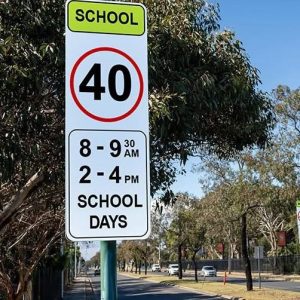
How to recognise it
- School speed sign with a time panel
- Usually shows 40 km/h
- Includes wording such as School Days and specific times
When it applies
- On school days only
- Only during the times shown on the sign (for example 8:00–9:30 am and 2:00–4:00 pm)
Important point for drivers
If the time shown on the sign is active:
- You must drive at 40 km/h
- The limit applies from the first school sign until the end sign
- This applies even if no children are visible
Here, time is the trigger, not children or flashing lights.
One Rule That Applies to All School Zones
Once a school speed limit is activated — by children present, flashing lights, or time — the limit applies from sign to sign.
Drivers should never assume a school zone has ended until they pass the end school zone sign.
Why This Matters for Medical and Fitness-to-Drive Assessments
School zones require drivers to:
- Notice visual signs and markings
- Understand conditional rules
- Adjust speed correctly
- Scan for hazards
- React calmly and safely
These skills are exactly what may be reviewed during a medical or fitness-to-drive assessment, particularly for senior drivers.
Difficulty understanding or responding correctly to school zones may raise concerns about:
- Vision
- Attention
- Reaction time
- Information processing
- Medication effects
This does not mean a person should stop driving — but it does mean refresher education and awareness are important.
Important Disclaimer
This article is provided by our association for general road safety education only.
• It is not legal advice
• It does not replace official government guidance
• Final decisions about licensing, medical reviews, and driving conditions are made by Department for Infrastructure and Transport (DIT) and the Registrar of Motor Vehicles
• In all cases, DIT rules, official signs, and medical advice take priority
If there is any difference between this article and official government information, DIT information always overrides.
References
- Department for Infrastructure and Transport (DIT) SA 2024, School zone speed limits, Government of South Australia, viewed 6 February 2026, https://www.dit.sa.gov.au/infrastructure/projects/40-km-h-school-speed-limits
- Government of South Australia 2024, School safety and school zones, myLicence, viewed 6 February 2026,https://mylicence.sa.gov.au/safe-driving-tips/school_safety
- Government of South Australia 2024, The Driver’s Handbook – Speed limits and school zones, myLicence, viewed 6 February 2026,https://mylicence.sa.gov.au/roadrules/the-drivers-handbook/speed-limits
- Government of South Australia 2024, Fitness to drive, SA.GOV.AU, viewed 6 February 2026,https://www.sa.gov.au/topics/driving-and-transport/licences/licence-details/fitness-to-drive
- Government of South Australia 2024, Assessing fitness to drive – medical conditions and reporting, myLicence, viewed 6 February 2026,https://mylicence.sa.gov.au/roadrules/the-drivers-handbook/fitness-to-drive
- Royal Automobile Association of South Australia (RAA) 2024, Rules around school zones and crossings, RAA SA, viewed 6 February 2026,