Introduction
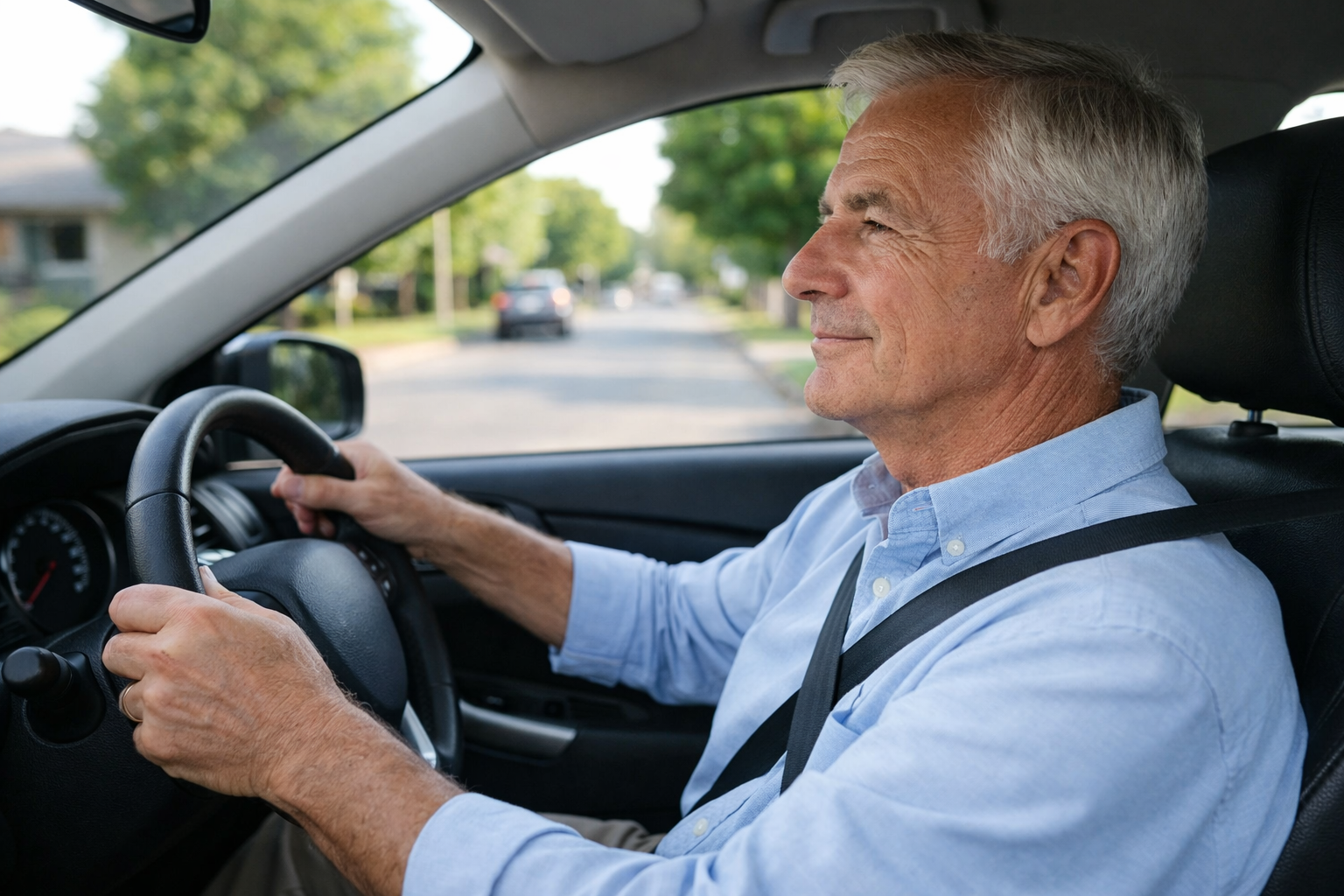
In South Australia, some licensed drivers may be required to complete a Practical Driving Assessment (PDA). This requirement can arise when a medical practitioner or another authorised officer identifies the need for further confirmation of a driver’s current ability to drive safely. In these circumstances, the Department for Infrastructure and Transport (DIT) may require the driver to undertake a Practical Driving Assessment as part of a reassessment process.
The Practical Driving Assessment is an on-road driving assessment, conducted by an authorised DIT assessment officer. It is used to observe a driver’s real-world driving behaviour and to determine whether the driver can continue to drive safely and independently under normal traffic conditions.
This page provides general information about how the Practical Driving Assessment is conducted and what it assesses. It is intended to help drivers and families better understand the reassessment process and does not replace information, instructions, or directions provided directly by DIT.
Purpose of the Practical Driving Assessment
The purpose of the Practical Driving Assessment is to assess whether a driver can currently operate a vehicle safely, in accordance with Australian Road Rules, in everyday traffic environments.
The assessment focuses on present driving performance, rather than on past driving history or theoretical knowledge. It is designed to reflect real-world driving demands and typical road situations.
How the PDA Differs from Other Driving Tests
The Practical Driving Assessment is different from tests undertaken by learner or provisional drivers.
It is not:
- a learner driver test
- a provisional licence test
- a Vehicle On Road Test (VORT)
- a competency-based training and assessment (CBT&A)
Unlike learner-focused tests, the PDA does not centre on specific manoeuvres such as reverse parallel parking or three-point turns. Instead, it evaluates overall driving behaviour in live traffic conditions.
Assessment Format and Duration
The assessment is conducted on public roads and typically lasts between 30 and 45 minutes.
During the assessment:
- the DIT assessment officer provides route directions
- the driver operates the vehicle in a range of everyday traffic situations
- roads may include residential streets, intersections, and higher-traffic roads where appropriate
The driver is expected to follow directions, comply with road rules, and respond appropriately to traffic and road conditions throughout the assessment.
What the PDA Assesses
The Practical Driving Assessment considers driving performance as a whole, rather than isolated actions.
Assessment officers observe whether the driver demonstrates:
- safe and timely decision-making
- effective observation and awareness
- appropriate vehicle control
- predictable and consistent driving behaviour
- compliance with Australian Road Rules
There is no publicly available numerical scoring system. Outcomes are based on the overall pattern of driving behaviour observed during the assessment.
Observation and Road Awareness
Drivers are expected to demonstrate effective observation skills throughout the assessment.
This includes:
- scanning the road environment ahead
- checking mirrors as required
- monitoring blind spots when changing direction or position
- maintaining awareness of other road users, including vehicles, pedestrians, and cyclists
Observation should be continuous and purposeful, supporting safe driving decisions rather than being limited to occasional or routine checks.
Judgement and Decision-Making
Judgement is a key component of the Practical Driving Assessment.
Drivers are assessed on their ability to:
- give way correctly
- choose safe gaps in traffic
- respond appropriately at intersections
- make decisions that suit the traffic situation
Decisions that place pressure on other road users, or hesitation that disrupts traffic flow, may be considered indicators of reduced driving reliability.
Vehicle Control and Lane Positioning
Drivers are expected to maintain stable and controlled operation of the vehicle.
This includes:
- smooth steering, braking, and acceleration
- maintaining correct lane position
- staying within marked lanes
- positioning the vehicle appropriately for turns and road conditions
Frequent lane drifting, late corrections, or difficulty maintaining stable positioning may be noted during the assessment.
Speed Management and Safety Margins
Drivers must comply with posted speed limits and adjust speed to suit road, traffic, and environmental conditions.
Assessment officers also observe whether drivers:
- maintain safe following distances
- allow adequate space when changing lanes or turning
- leave appropriate safety margins around the vehicle
Driving significantly below surrounding traffic without a clear reason may also be considered a safety concern, as it can create unpredictability for other road users.
Communication With Other Road Users
Clear communication helps other road users understand a driver’s intentions.
Drivers are assessed on:
- correct and timely use of indicators
- appropriate road positioning
- predictable and consistent vehicle movement
Late or unclear signalling, or signalling that does not align with driving actions, may reduce clarity and increase risk.
Progress and Traffic Flow
Drivers are expected to make reasonable and safe progress.
This includes:
- responding appropriately to traffic conditions
- avoiding unnecessary delays
- maintaining a steady and predictable driving rhythm
Excessive hesitation or overly cautious behaviour that disrupts traffic flow may be recorded as a concern, even if no specific road rule is breached.
Consistency and Reliability
Consistency is an important consideration in the Practical Driving Assessment.
Assessment officers consider whether:
- safe behaviours are demonstrated consistently
- decisions remain reliable across different situations
- driving performance is stable throughout the assessment
While a single minor issue may not determine the outcome, repeated concerns across multiple areas may indicate that a driver does not currently demonstrate sufficient reliability for independent driving.
Assessment Outcomes
The Practical Driving Assessment does not use a numerical pass-mark system.
Outcomes are based on:
- observed driving behaviour
- compliance with road rules
- safety margins
- judgement and consistency
An unsuccessful outcome reflects the assessment officer’s conclusion that the driver does not currently demonstrate adequate reliability for independent driving in normal traffic conditions.
Preparing for the Practical Driving Assessment
Preparation for the PDA generally focuses on:
- improving observation and anticipation
- strengthening judgement in traffic
- maintaining correct positioning and spacing
- driving smoothly and predictably
- developing consistent driving habits
Practising individual test manoeuvres is less important than improving overall driving behaviour and reliability.
References (Harvard style)
- Department for Infrastructure and Transport (DIT) 2024, Practical driving test, Government of South Australia, viewed 6 January 2026, https://www.sa.gov.au/topics/driving-and-transport/licences/tests/practical-driving-test.
- Government of South Australia 2024, Fitness to drive, viewed 6 January 2026, https://www.sa.gov.au/topics/driving-and-transport/licences/licence-details/fitness-to-drive.
- South Australia Police 2023, Older road users – Fitness to drive: Fact sheet, Government of South Australia, viewed 6 January 2026, https://www.police.sa.gov.au/__data/assets/pdf_file/0007/955033/Older-Road-Users-Fitness-To-Drive-Fact-Sheet.pdf.
- Austroads 2022, Assessing fitness to drive: A guide for health professionals, 5th edn, Austroads Ltd, Sydney, viewed 6 January 2026,
- https://austroads.gov.au/publications/assessing-fitness-to-drive/ap-g56.