— Supporting Confidence, Safety and Dignity for Older CALD Drivers
Why This Matters to Families
In many migrant households, especially those from non-English speaking backgrounds (CALD), life decisions — including driving — are not made alone. Seniors live within multi-generational households, where safety, independence, and identity often overlap.
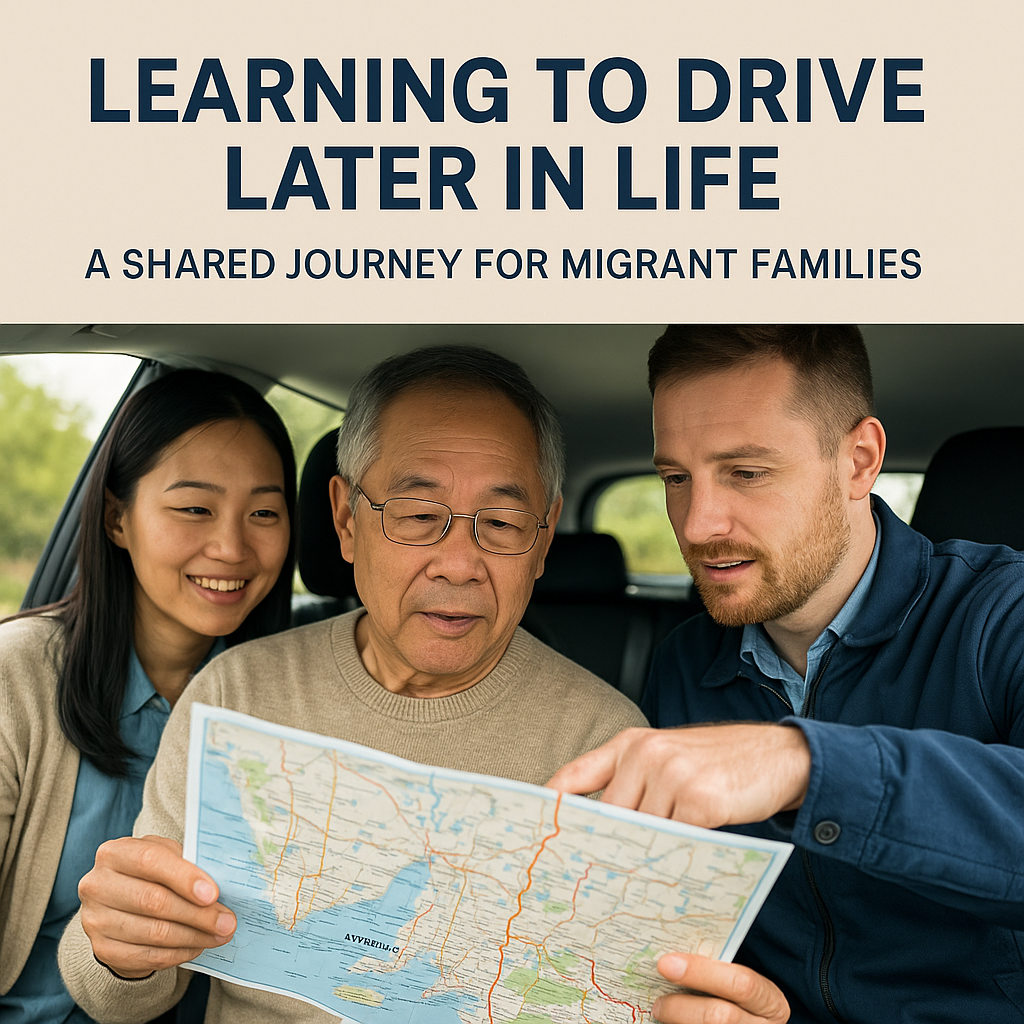
When an older adult restarts their driving journey, it becomes more than a personal decision. It involves the support, emotions, and understanding of:
- The senior – who may carry rich driving experience but face a new system
- Their adult children – who balance love with worry
- The instructor – who becomes a cultural translator as well as a guide
A Senior’s Decision: Driving for Dignity
Seniors often return to driving not for convenience, but for purpose:
- They wish to reduce pressure on their children
- They want to stay active in their community
- They hope to show they are still capable and independent
Driving becomes a symbol of continuity, not rebellion.
The Family’s Role: Concern with Compassion
Adult children in CALD families may carry silent stress:
- They manage appointments and transport
- They fear accidents or confusion
- They hesitate to “say no” or “say yes”
This emotional tension requires better understanding of the licensing system, and gentle communication, not just assumptions.
The Instructor’s Role: Cultural Navigation
A skilled instructor understands:
- Seniors from CALD backgrounds may not ask questions openly
- Language barriers affect confidence, not intelligence
- Clear visual cues and a step-by-step approach reduce fear and improve retention
Challenges That Require Support
- Language in Testing
Driving test instructions like “at the second set of lights, turn right” may confuse otherwise capable drivers.
Visual learning, practice, and instructor support help reduce this barrier. - Medical and Age Assessments
Fitness forms, medical reviews, and unfamiliar paperwork may feel intimidating.
Seniors need reassurance and practical guidance to navigate them. - Pride and Identity
Many seniors once drove professionally. Retraining is not a sign of weakness, but they need space to adjust emotionally.
How We Can Work Together
Seniors:
- Embrace learning as growth
- Ask for help without shame
- Take it one step at a time
Families:
- Understand the process before advising
- Join a lesson to build empathy
- Avoid framing driving as “all or nothing”
Instructors:
- Use patient, culturally aware teaching
- Break instructions down
- Build trust before focusing on test performance
A Quiet Message Beneath
Driving is only one part of independence.
But for many older migrants, it is a visible act of inclusion — showing they are still part of the road, the community, and the country.
When road systems adapt to different learning needs,
and families, seniors, and instructors work side by side,
we create safer roads — and stronger communities.