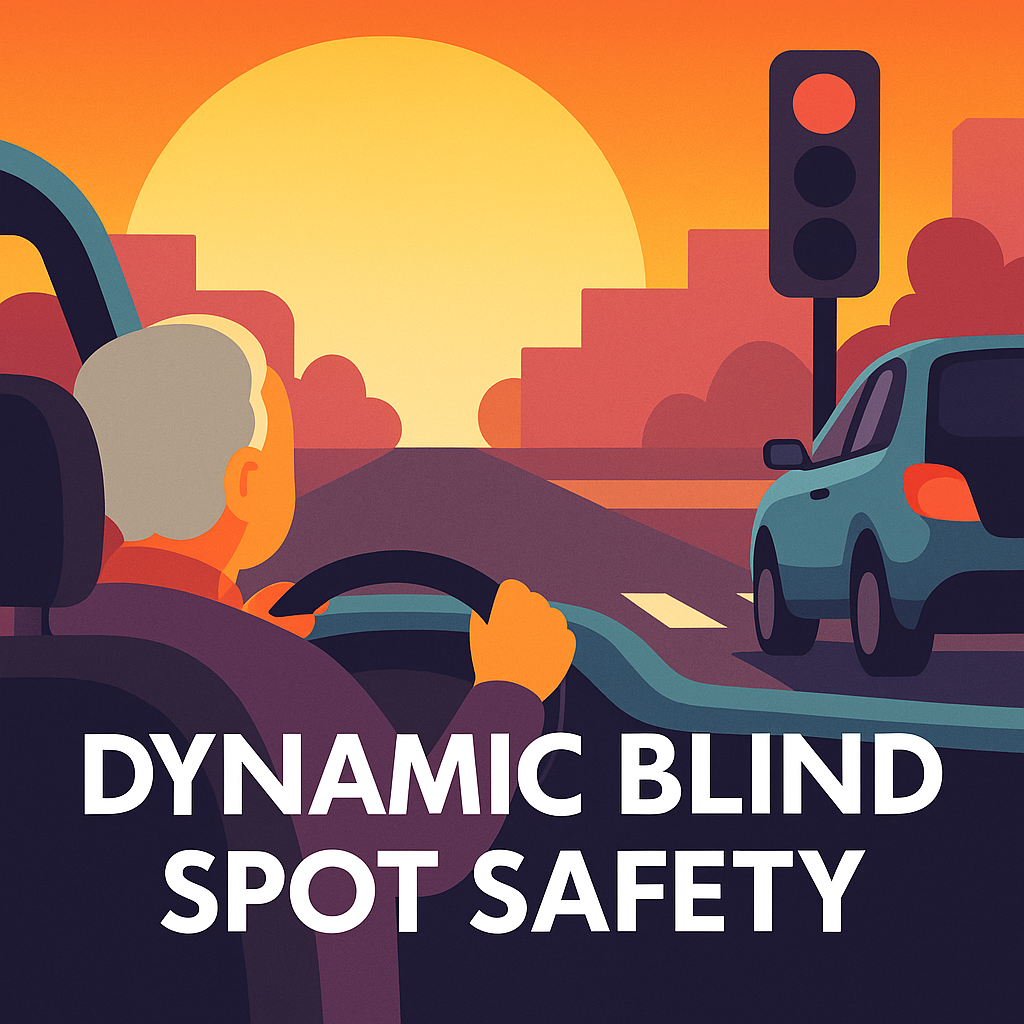
Dynamic blind spots are not permanent blind zones like those created by a car’s pillars or mirrors. Instead, they are temporary and change depending on the environment — such as road shape, vehicle movement, or light conditions. One of the most dangerous examples is when a driver turns into an intersection and faces direct sunlight, making it difficult to see other road users clearly.
What Causes Dynamic Blind Spots?
- Sun Glare at Intersections
During early mornings or late afternoons, the sun can shine directly into the driver’s eyes when turning. This creates a powerful glare, often reducing visibility to near-zero — especially for older drivers who may have age-related vision decline. - Angled Streets or Slopes
Turning from a downhill or uphill road into another can block the view of oncoming traffic, pedestrians, or cyclists who may appear suddenly. Combined with sunlight, these turns become even more dangerous. - Poor Windshield Conditions
Dirty windshields, scratches, or poorly adjusted visors can worsen glare, creating more temporary blind zones. - Sudden Light-to-Shadow Transitions
Driving from a bright area into shade (e.g., under trees or overpasses) can also create a brief vision blackout.
Risks for Senior Drivers
- Slower Eye Adaptation
Older adults often take longer to adjust their eyes from bright to dark areas, making dynamic blind spots more dangerous. - Delayed Reaction Time
If visibility is reduced, there may not be enough time to spot and react to a pedestrian or another vehicle. - Assumption of Clear Road
Drivers may turn based on habit or expectation without noticing a hidden cyclist or vehicle in the dynamic blind spot.
Practical Tips to Reduce Risk
- Use Polarised Sunglasses
They help reduce glare significantly and improve contrast. - Adjust Driving Times
Avoid east-facing drives early in the morning and west-facing roads in late afternoon. - Always Pause at Intersections
After stopping, take one extra moment to scan left and right carefully — especially when the sun is in your eyes. - Keep the Windshield Clean
Regularly clean both the inside and outside of your windshield. - Use Sun Visors Properly
Adjust your sun visor in advance when you know you’re turning into a glare zone.